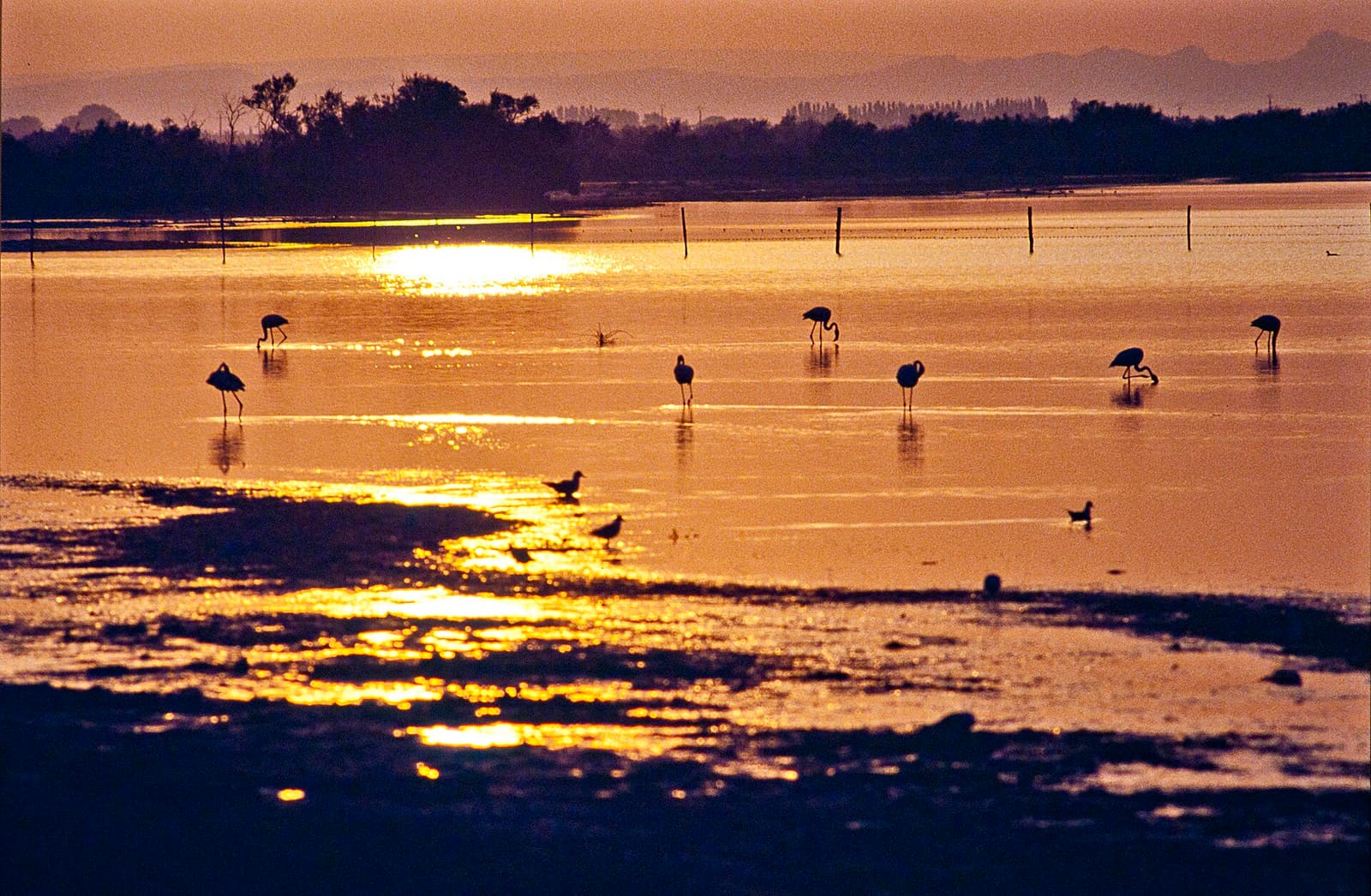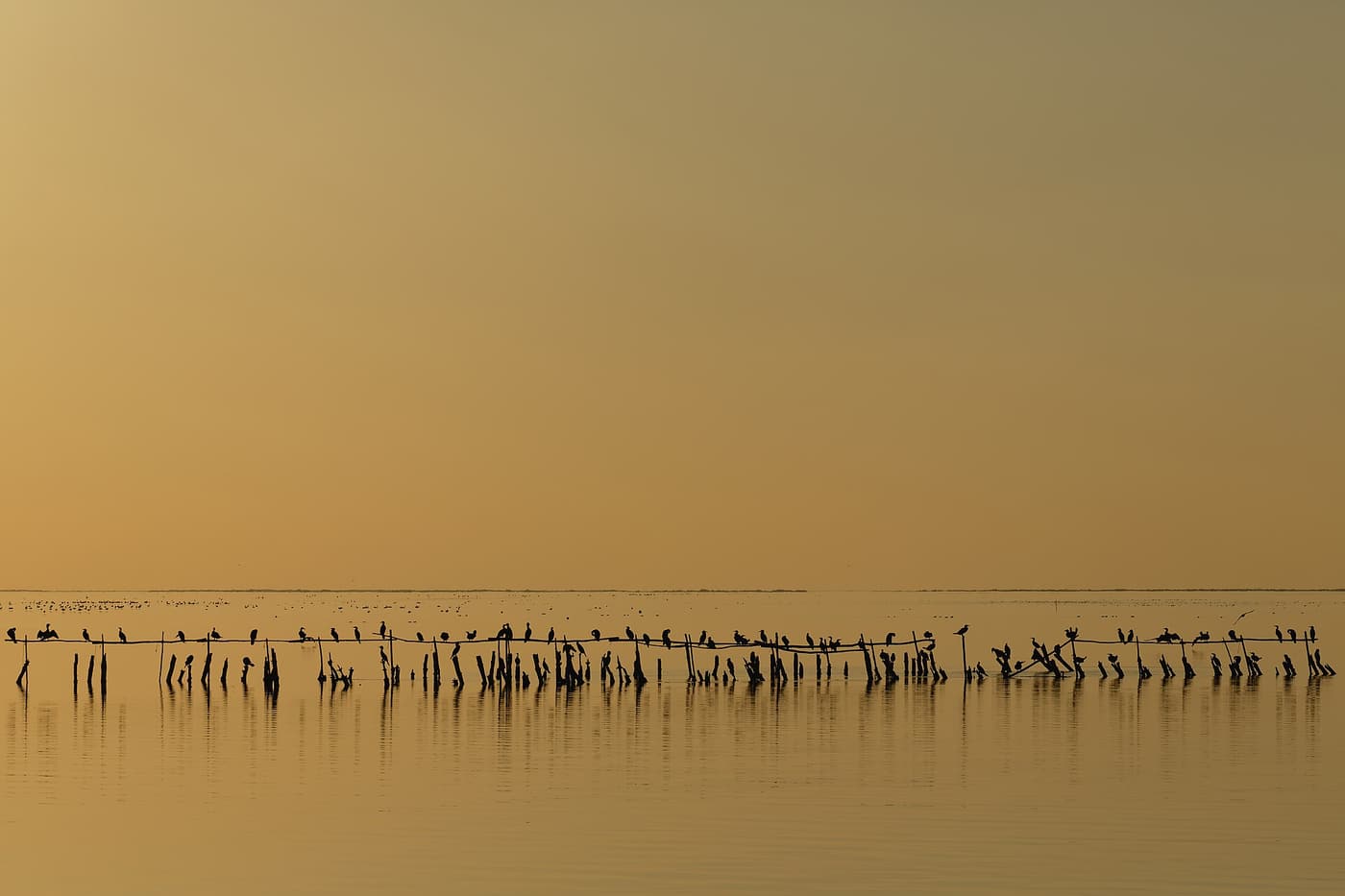
The Camargue is not a single sight but a landscape — flat, open, watery and constantly changing with the light. It rewards slowing down: driving less, walking and riding more, and being out at the beginning and end of the day.
What is the Camargue?
The Camargue is the delta of the Rhône. Just above Arles the river splits into the Grand Rhône to the east and the Petit Rhône to the west. The triangle between them, the Grande Camargue, is the heart of the region; the land west of the Petit Rhône around Aigues-Mortes is the Petite Camargue. Together they form one of the largest wetlands in Western Europe.
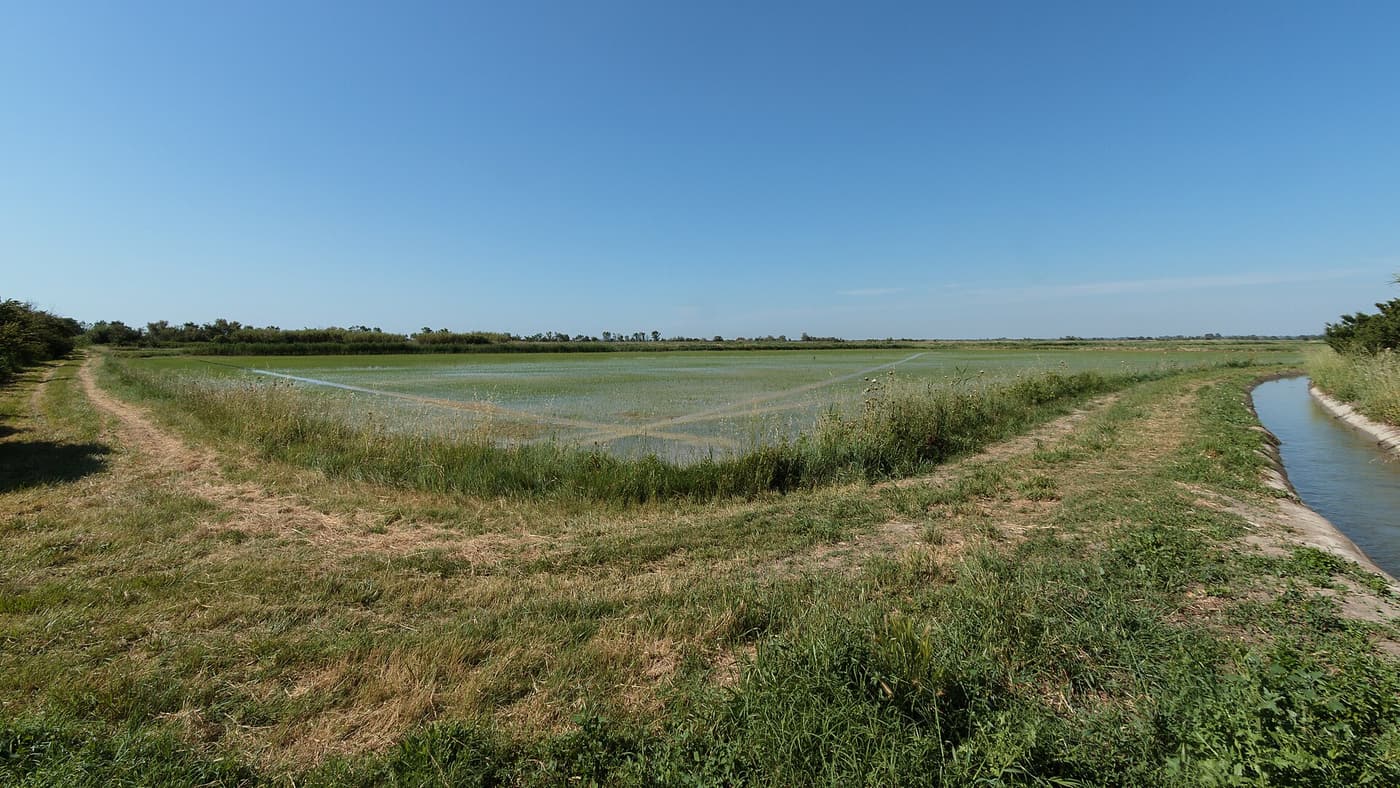
It is a land made by water. Until the 19th century the river flooded and shifted freely; since then, dykes along the Rhône and the sea and a network of canals have controlled it, turning much of the north into farmland and rice fields, the south into salt works, and leaving the centre to lagoons and marsh. Fresh water from the river and salt water from the sea mix in different proportions everywhere, which is why the landscape — and its wildlife — is so varied.
Protected areas
- Parc naturel régional de Camargue — created in 1970, covering the Grande Camargue and the communes of Arles, Saintes-Maries-de-la-Mer and part of Port-Saint-Louis-du-Rhône. A regional park is a lived-in landscape: farms, villages and roads, with rules to protect nature and traditions.
- Réserve naturelle nationale de Camargue — since 1927, around the Étang de Vaccarès. Mostly closed to the public; visit via La Capelière.
- The delta is also a UNESCO biosphere reserve and a Ramsar wetland of international importance, and includes other protected sites such as the Domaine de la Palissade, the Marais du Vigueirat and the Tour du Valat research station’s lands.
A short history
Romans farmed the edges of the delta from Arles, then a great city. In the Middle Ages, monasteries and the town of Saint-Gilles flourished, and in the 13th century Saint Louis built Aigues-Mortes as his Mediterranean port. Salt has been harvested for millennia; the industrial salt works of Aigues-Mortes and Salin-de-Giraud date from the 19th century. Rice cultivation expanded after the Second World War to desalinate the soil and feed the country.
The culture of the delta — the gardians, the manades, the white horses and black bulls, the Provençal language and dress — was celebrated in the early 20th century by the poet Frédéric Mistral and by the Marquis Folco de Baroncelli, a manadier who helped codify the traditions. Today they are very much alive in festivals, bull games and the daily work of the herds.
| Area | What you find | Best for |
|---|---|---|
| Saintes-Maries-de-la-Mer | The town, the church, beaches, stables, safaris | First-time visitors, riders, beach lovers |
| Around the Vaccarès | National reserve, La Capelière, lagoons, rice fields | Birdwatchers, photographers |
| Salin-de-Giraud & the south-east | Salt pans, Palissade, Piémanson and Beauduc beaches | Wild landscapes, kitesurfers |
| Aigues-Mortes & the Petite Camargue | Ramparts, salt train, manades, L’Espiguette | History, families, beach |
| Arles | Roman monuments, Van Gogh, museums, transport | Culture, a base without a car |
 Towns & heritage
Saintes-Maries-de-la-Mer
The capital of the Camargue, on the edge of the sea
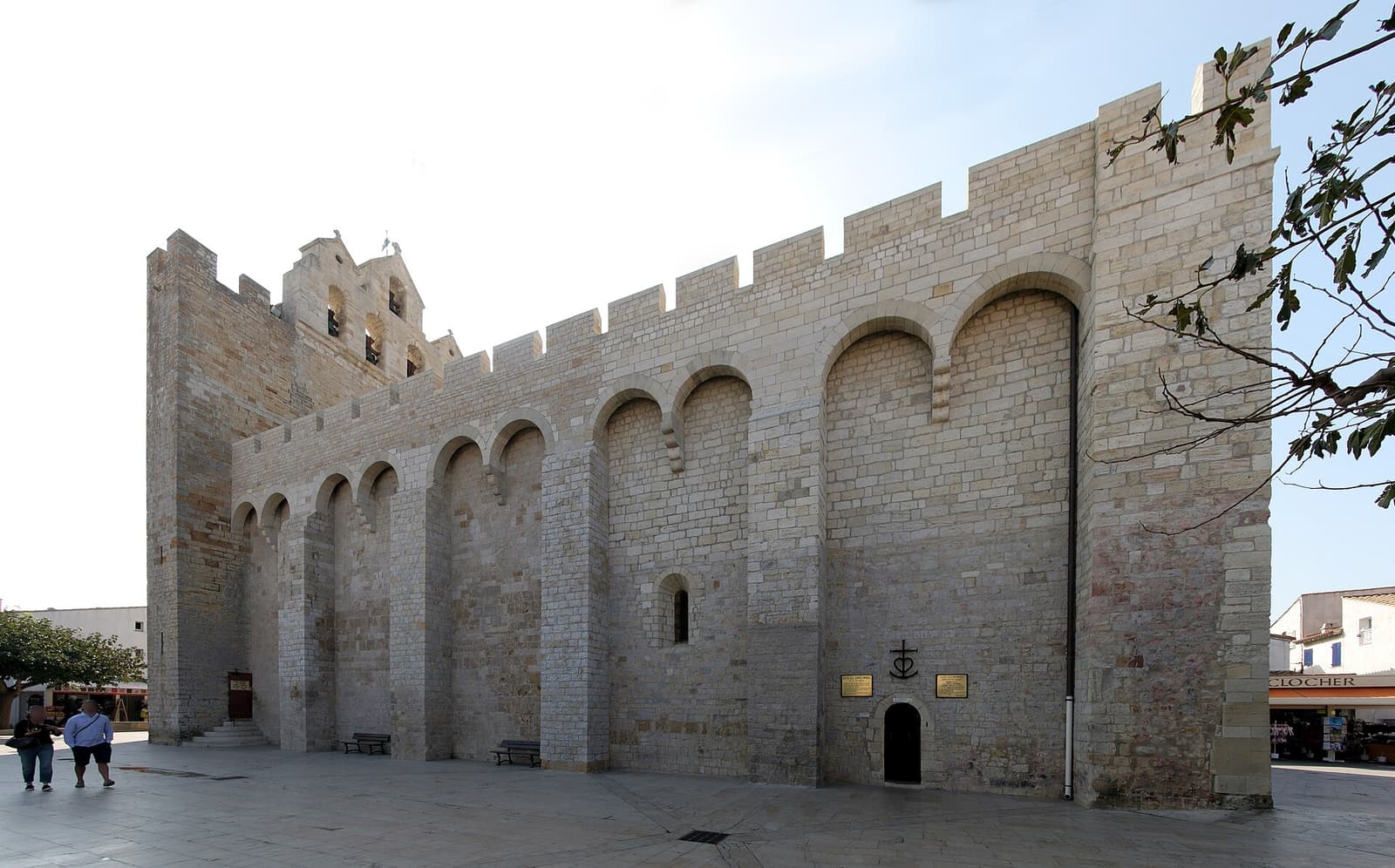
The only real town in the heart of the delta: whitewashed houses, seafood restaurants and long sandy beaches gathered around a fortified Romanesque church whose roof you can walk on. It is the home of the gardians and their white horses, the stage for the great Gitan pilgrimage every May, and the natural base for horse rides, 4x4 safaris, boat trips and the flamingo park just up the road.
 Towns & heritage
Aigues-Mortes
A perfect medieval walled town among the salt marshes
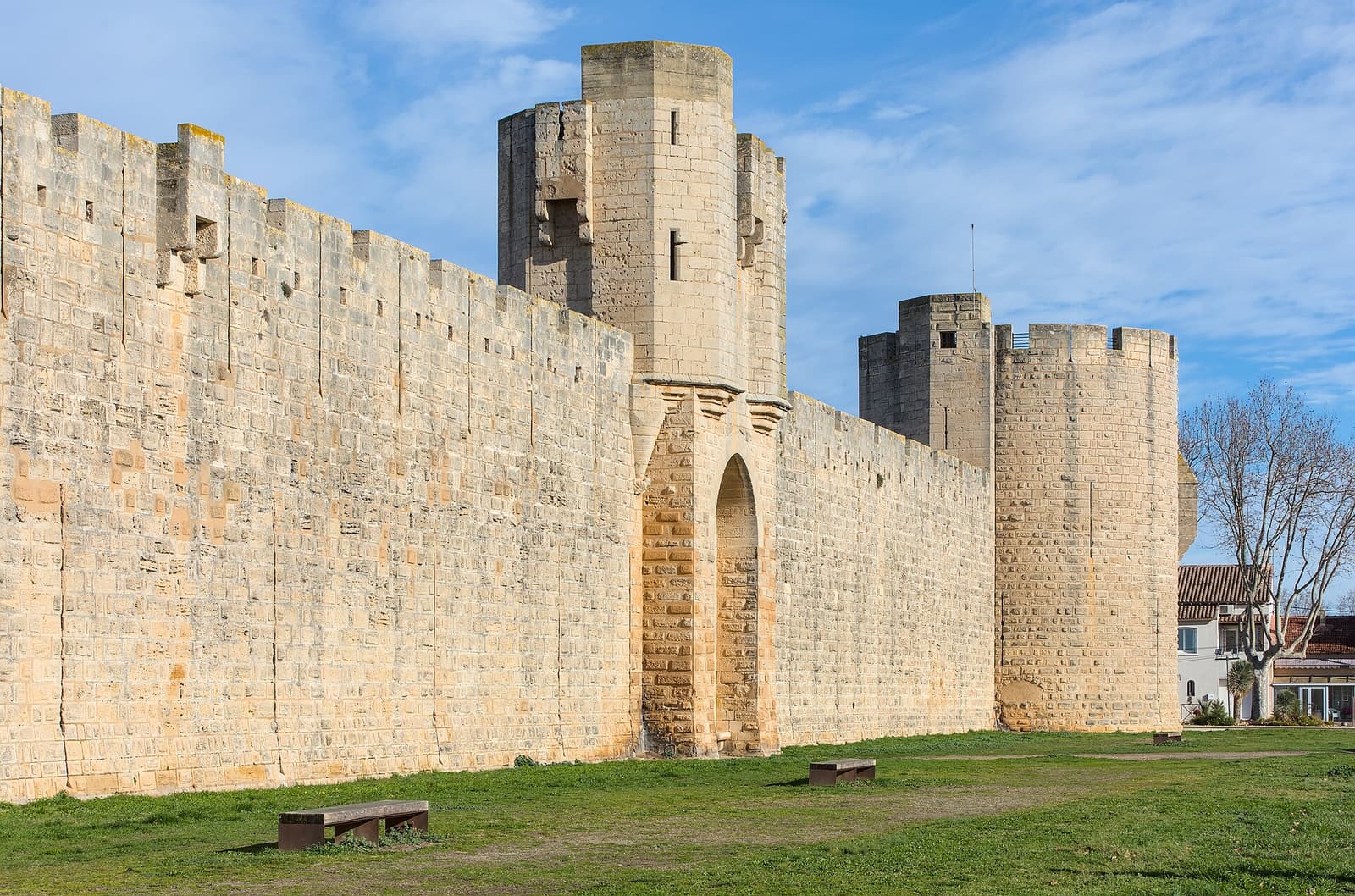
Founded by King Louis IX in the 13th century as the port from which he sailed on crusade, Aigues-Mortes still sits inside its complete rectangle of ramparts. You can walk the wall-walk all the way round, climb the great round Tour de Constance, then take the little train into the pink salt pans just outside the gates.
 Towns & heritage
Arles
Roman monuments, Van Gogh and the gateway to the delta
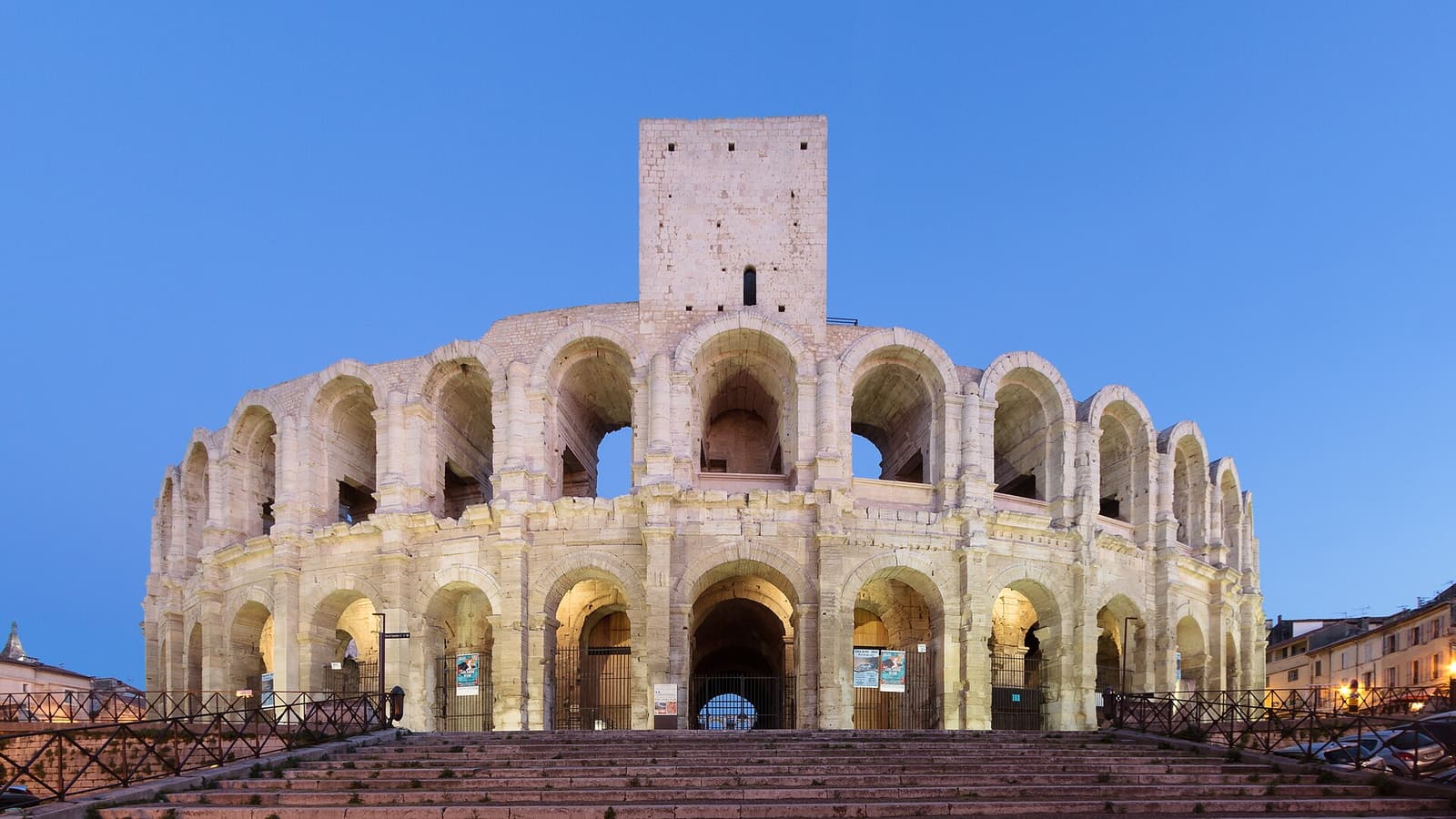
The Camargue begins at the gates of Arles, and most of the delta actually belongs to this large commune. The old town is a UNESCO World Heritage site packed with Roman and Romanesque monuments — the amphitheatre, the ancient theatre, Saint-Trophime — and with places Van Gogh painted in 1888–89. Add the LUMA arts campus, the summer photography festival and good restaurants, and it is the most comfortable base for exploring the Camargue.
 Wetlands & wildlife
Pont de Gau Bird Park
Flamingos close enough to photograph without a long lens
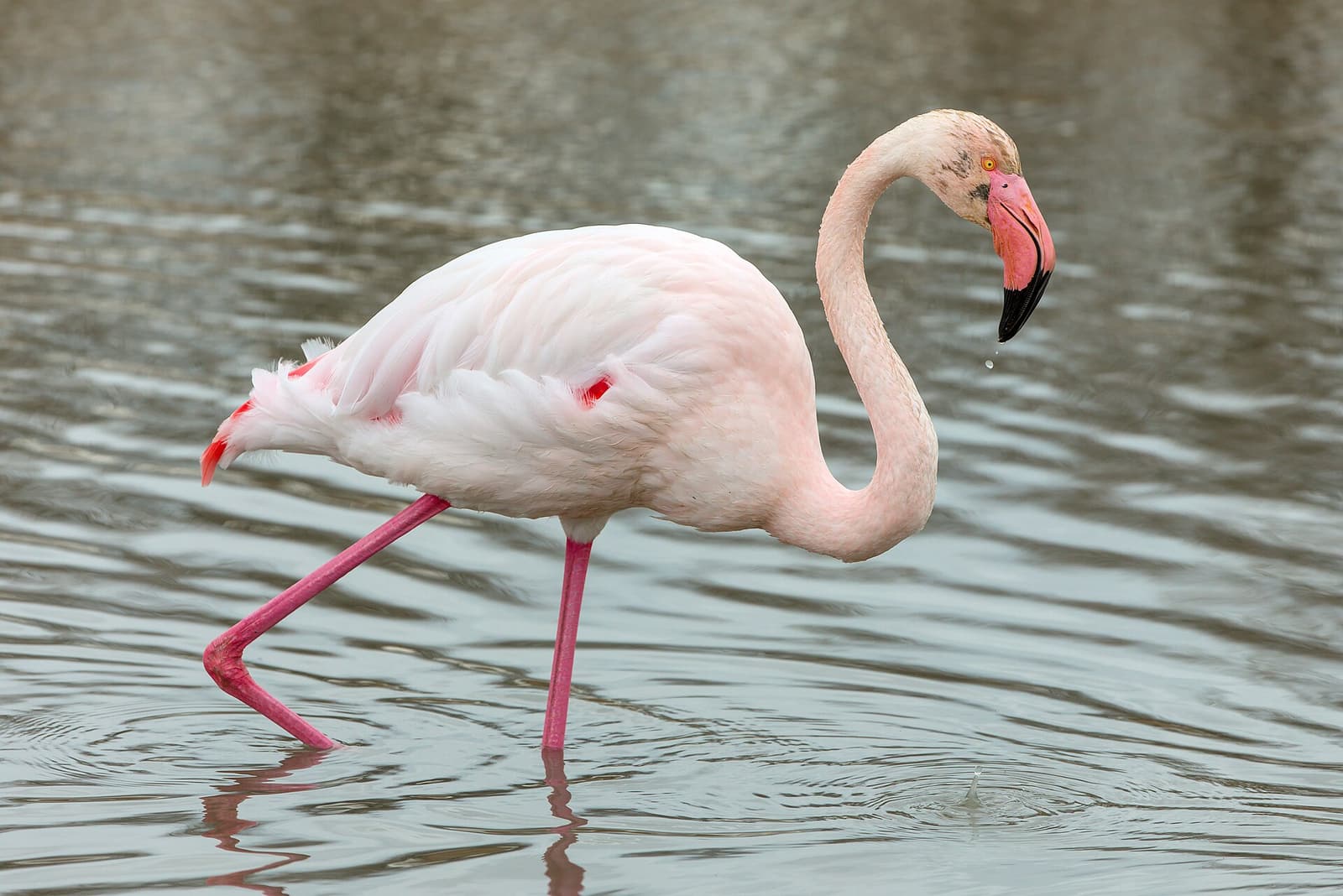
The Parc Ornithologique du Pont de Gau, four kilometres north of Saintes-Maries, is the easiest place in the Camargue to see greater flamingos up close. Around 60 hectares of ponds and marsh are threaded with level footpaths of about seven kilometres in total, with hides and information boards. The birds are wild and come and go freely; many feed only metres from the paths.
What to see and do
- Flamingos at the Pont de Gau bird park and on the lagoons.
- A safari onto the estates to see the horses and bulls — by 4x4, electric vehicle, bike or on horseback.
- Saintes-Maries-de-la-Mer: the fortified church and its rooftop view.
- Aigues-Mortes: the ramparts and the pink salt pans.
- Arles: the Roman amphitheatre, Saint-Trophime and Van Gogh.
- A boat trip on the Petit Rhône and the wild beaches.
Food and drink
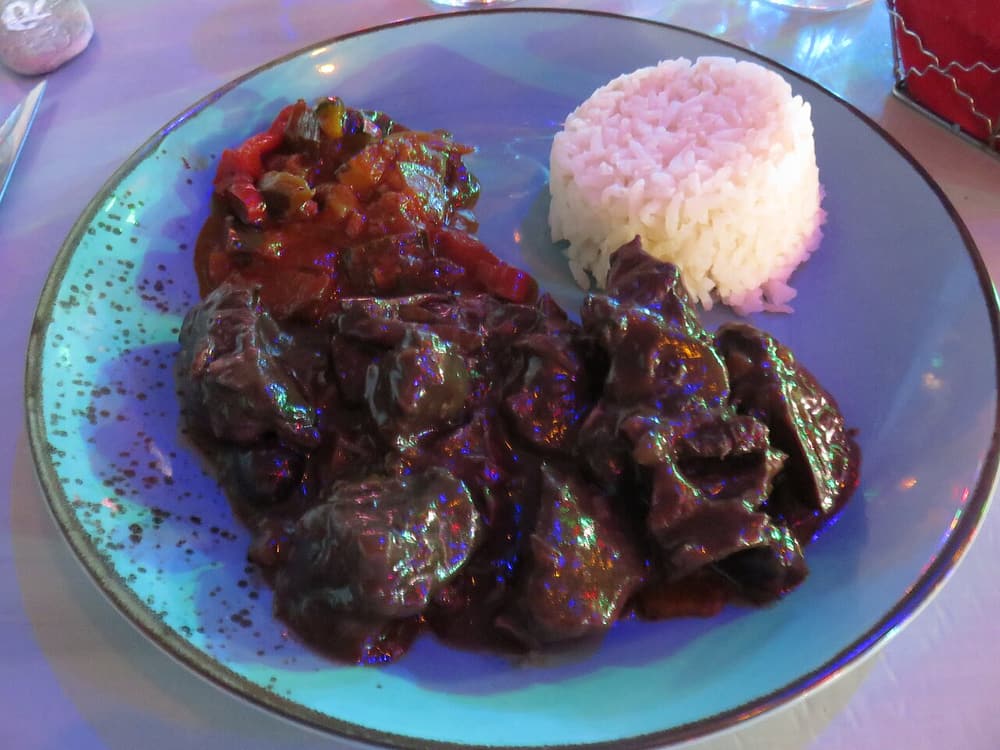
- Gardiane de taureau — beef from Camargue bulls (an AOP product), slow-cooked in red wine, served with rice.
- Camargue rice (IGP) — white, wholegrain, and the nutty red rice.
- Tellines — tiny clams from the beaches, sautéed with garlic and parsley.
- Fleur de sel from Aigues-Mortes and Salin-de-Giraud.
- Sable wines — the vins des sables, grown on the sandy soils around Aigues-Mortes, often pale rosé.
- Fish and seafood in Saintes-Maries and Le Grau-du-Roi.
Money and costs
France uses the euro, and cards are accepted almost everywhere, though small stables, markets and car parks sometimes prefer cash. As a rough guide: a half-day safari costs around €50–90 per person, a one-hour horse ride around €30–90, the Aigues-Mortes ramparts under €15 and the Pont de Gau park around €10–15. A main course in a simple restaurant is typically €15–25. Prices rise in summer; always check current rates.
Mosquitoes, wind and sun
- Mosquitoes are a fact of life in a wetland, especially from late spring to early autumn, at dusk and on still, humid evenings. Bring repellent, wear long, light clothing in the evening and choose rooms with screens or air conditioning.
- The Mistral is a strong, cold north wind that can blow for days, most often in winter and spring. It clears the sky and keeps mosquitoes away, but makes cycling and beaches hard work.
- Sun and heat: there is almost no shade in the delta. In summer, carry water and a hat, and plan outdoor activities for early morning and evening.
Rules and good behaviour
- Keep to public roads, marked paths and car parks. Fields, dykes and tracks are mostly private or protected.
- Never approach or feed bulls or horses in their pastures, and do not cross fences.
- Do not disturb nesting birds; respect seasonal closures on beaches and dunes.
- Drones are restricted over nature reserves and near wildlife — check the rules before flying.
- Wild camping is not allowed in the reserves and is restricted on the beaches.
Language
French is spoken everywhere; English is common in hotels and tour companies but less so in small restaurants and stables. A few words of French go a long way. You will also see Provençal (Occitan) names on signs and in festivals.
Safety
The Camargue is a safe place to travel. The main risks are natural: heat, sunburn, dehydration, strong currents on the beaches and the occasional bull festival in town streets — watch from behind the barriers. Lock your car and keep valuables out of sight at beach and trail car parks.