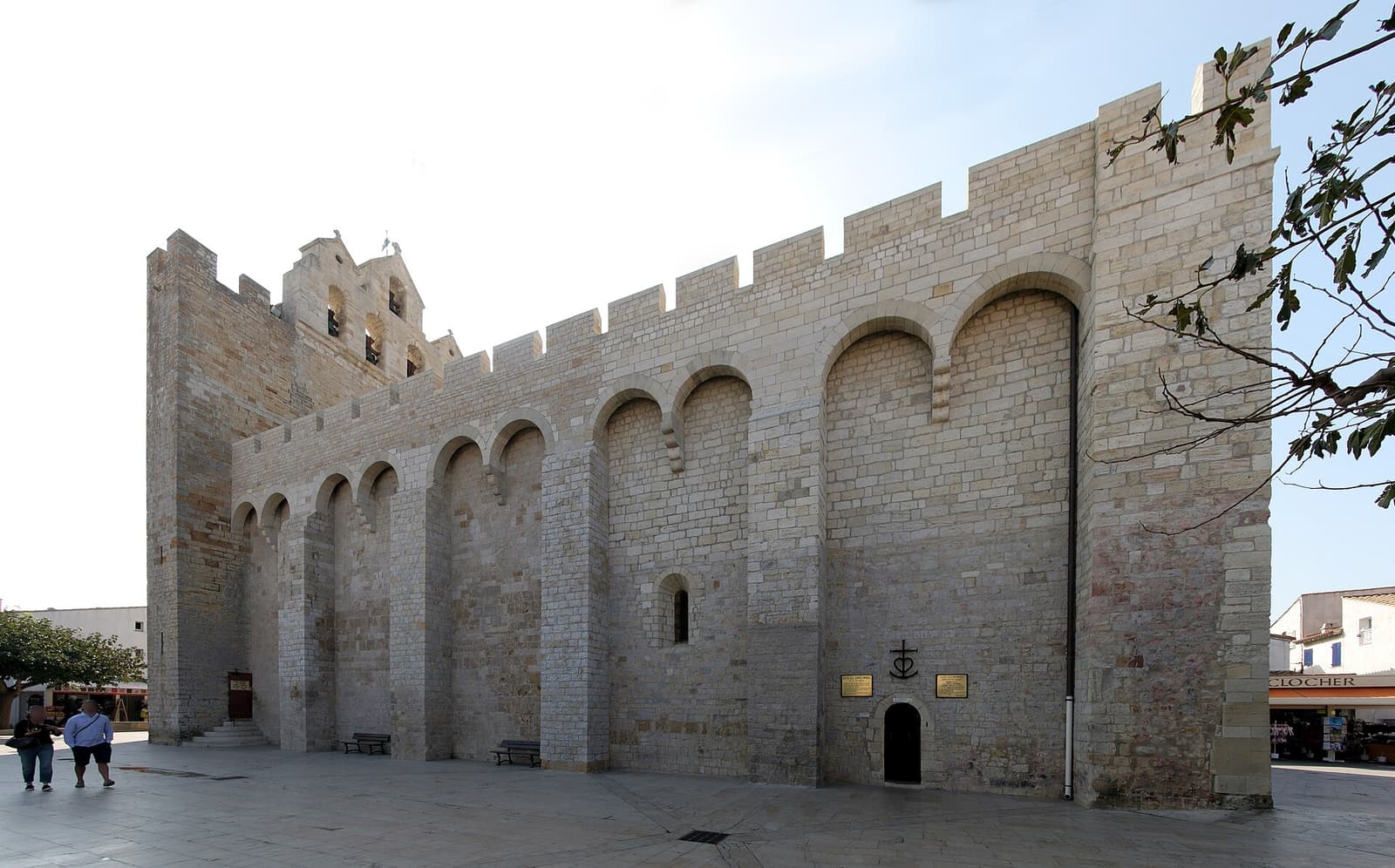
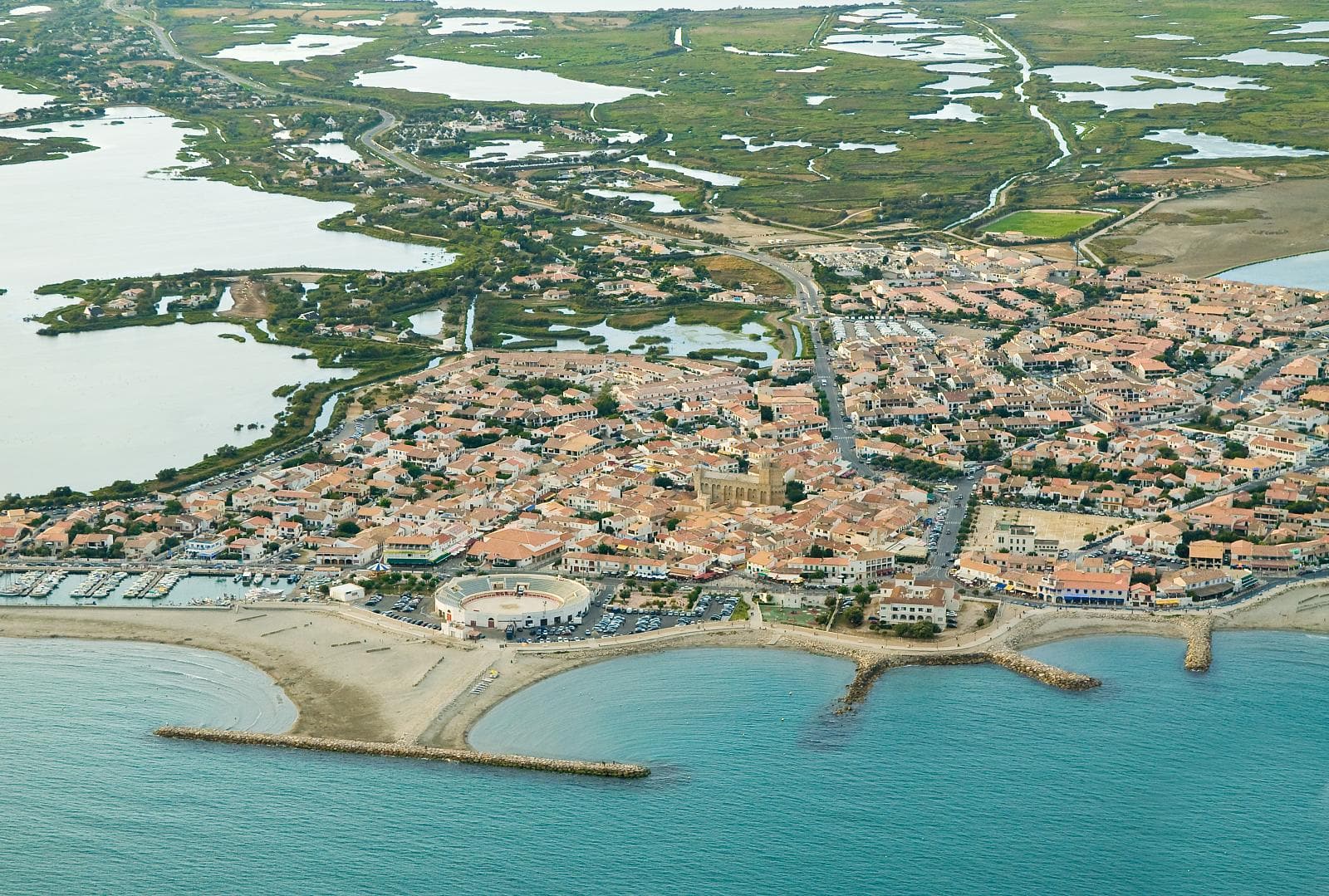
Saintes-Maries-de-la-Mer is the only town of any size in the heart of the Camargue, a low white settlement on the shore where the land runs out between the marshes and the sea. Everything here faces the beach and the great fortified church, and everything around it — lagoons, pastures, the dyke along the sea — is part of the Regional Nature Park.
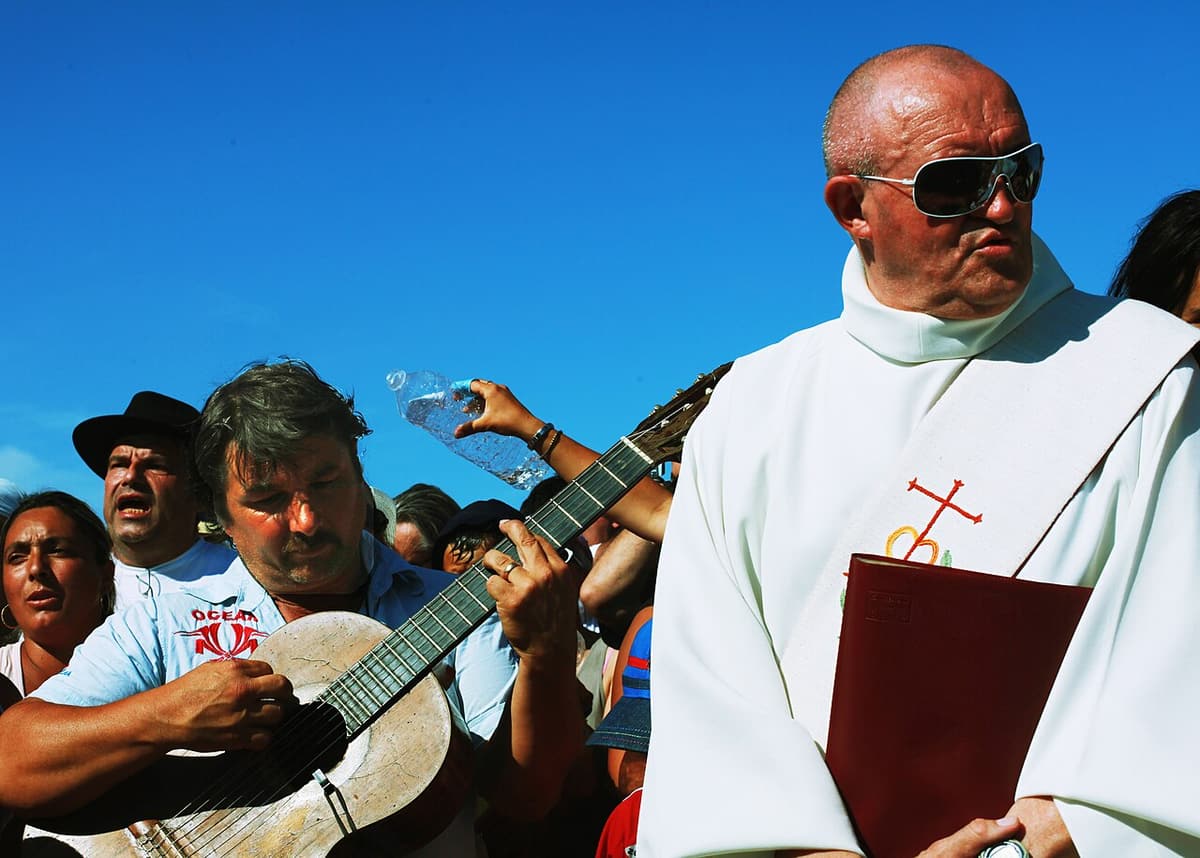
The town takes its name from a legend: that Mary Salome and Mary Jacobe, followers of Jesus, landed here by boat after fleeing Palestine, accompanied — in the Gitan tradition — by Sara, who became the patron saint of the Roma, Manouches and Gitans. Their relics are venerated in the church, and twice a year the town fills with pilgrims. The rest of the time it is a lively, slightly old-fashioned resort, with seafood terraces, gardian-style boutiques and horse-riding stables on every road out of town.
What to see and do: Saintes-Maries-de-la-Mer
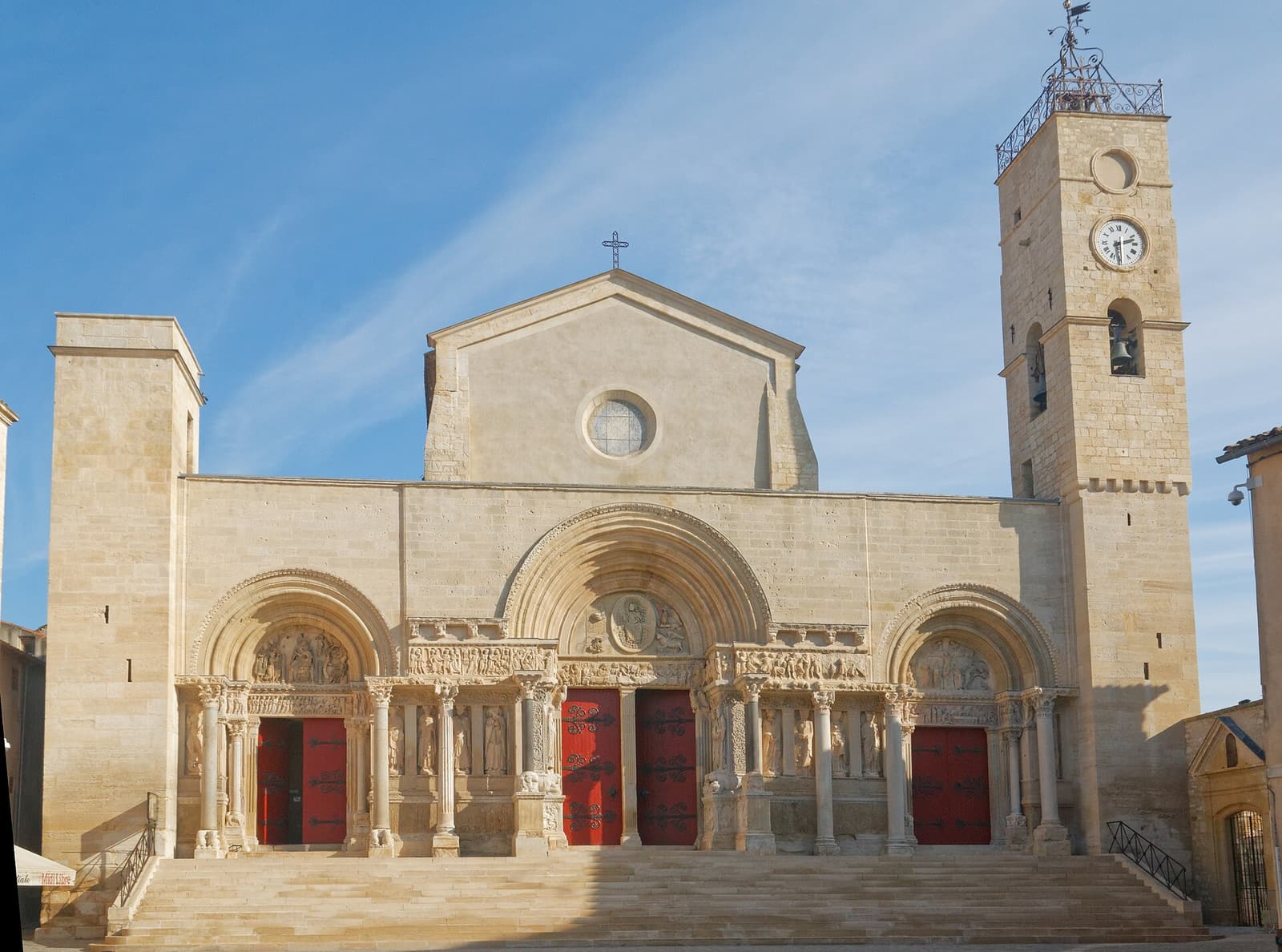
The church of Notre-Dame-de-la-Mer
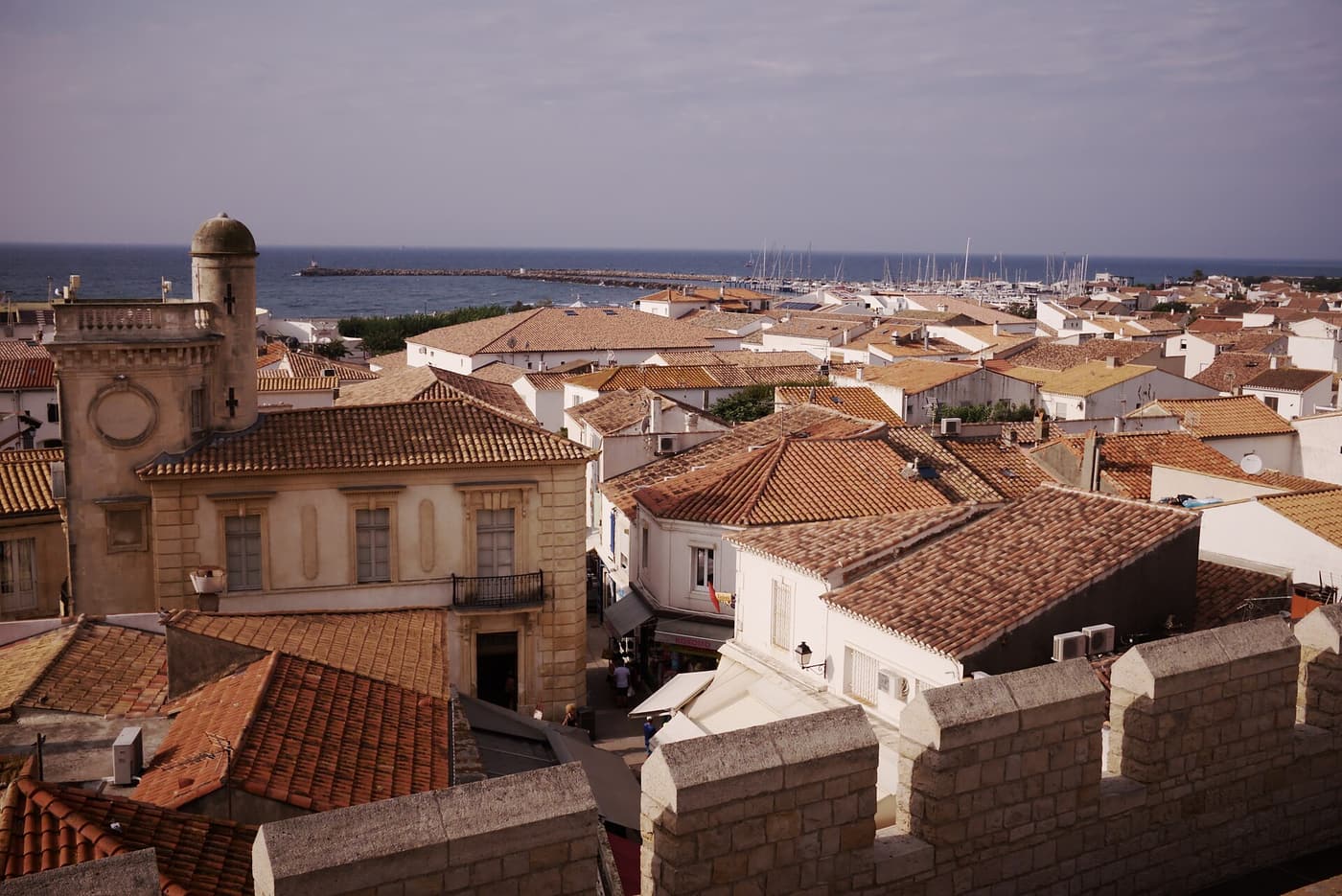
Built mainly in the 11th and 12th centuries and fortified against raiders, the church looks more like a castle than a place of worship: a single nave, a crenellated parapet and a well inside for sieges. In the crypt stands the statue of Saint Sara, dressed in layers of robes and surrounded by candles; the reliquary of the two Marys is kept high in the upper chapel. For a small fee you can climb onto the roof terrace for one of the best views in the Camargue — over the town, the sea and the lagoons stretching inland. Opening hours of the roof are limited and it closes in bad weather.
The pilgrimages
On 24 May the statue of Sara is carried in procession through the streets to the sea, escorted by gardians on horseback, and on 25 May the same is done for the two Marys. Thousands of Gitans and other travellers arrive for days beforehand; music, devotion and crowds fill the town. A second, quieter pilgrimage takes place on the Sunday closest to 22 October. Accommodation for the May dates is booked months ahead.
Beaches and the sea dyke
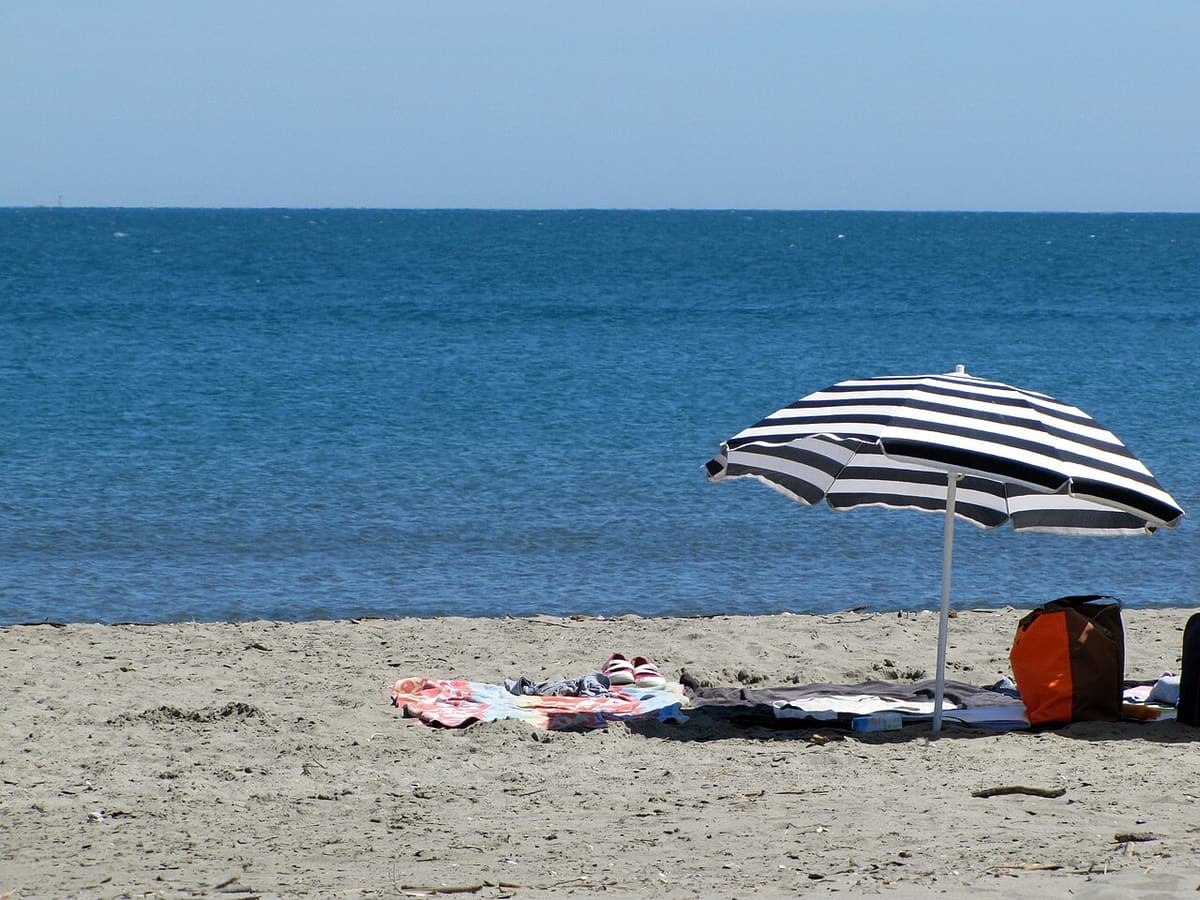
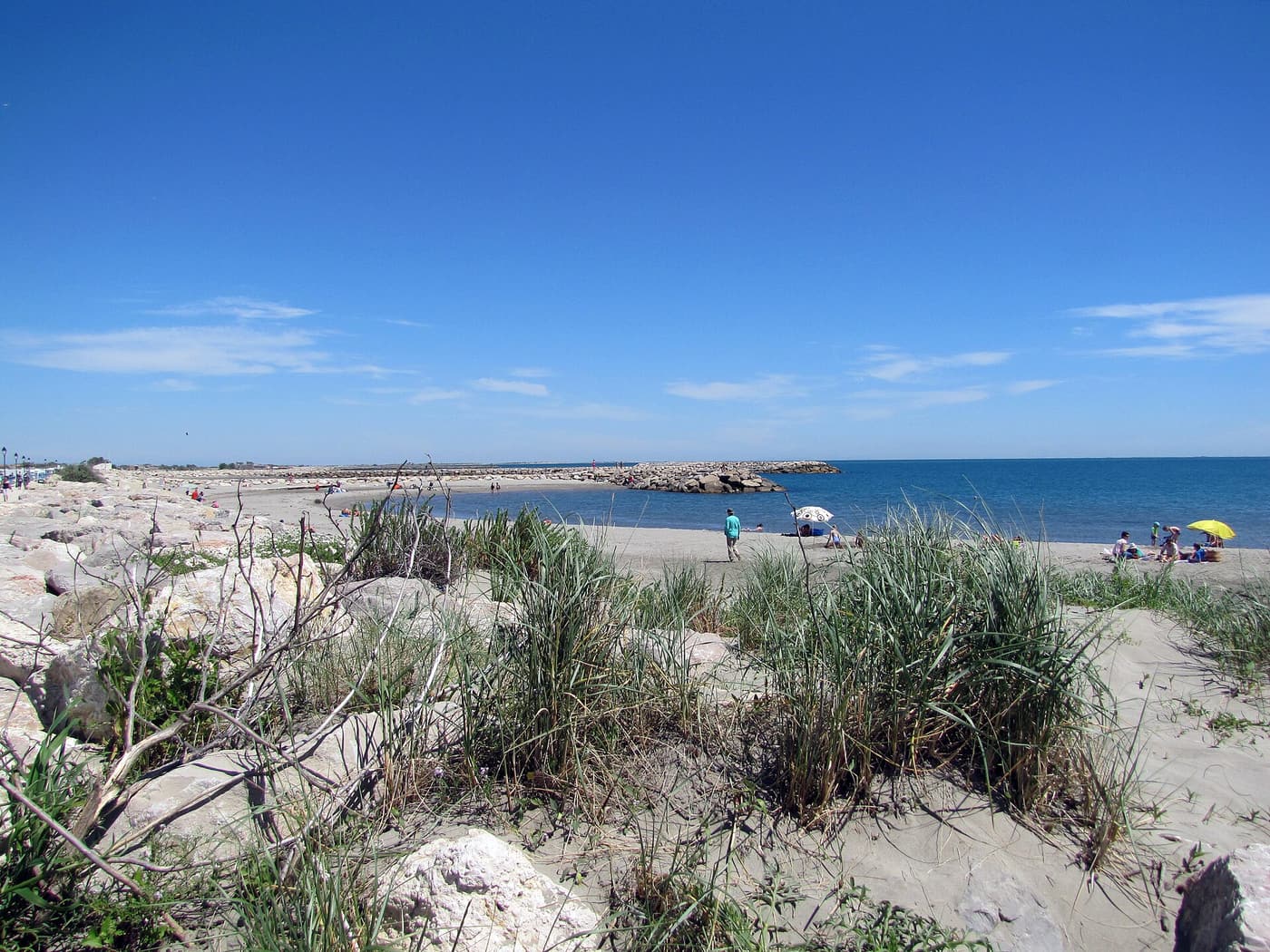
Sand runs for kilometres on both sides of town. The beaches near the centre are supervised in summer; further east, the Digue à la Mer, a 19th-century sea dyke, carries a track closed to cars that walkers and cyclists can follow for many kilometres between the sea and the lagoons towards the Gacholle lighthouse. See our beaches guide.
Ride a Camargue horse
Stables line the roads into town and offer rides from an hour to a full day through the marshes and along the beach, on the small, sure-footed white horses of the delta. Beginners are welcome on most rides. Choose a stable that looks after its horses and keeps groups small; or book a ride online with confirmed times.
Safaris and boat trips
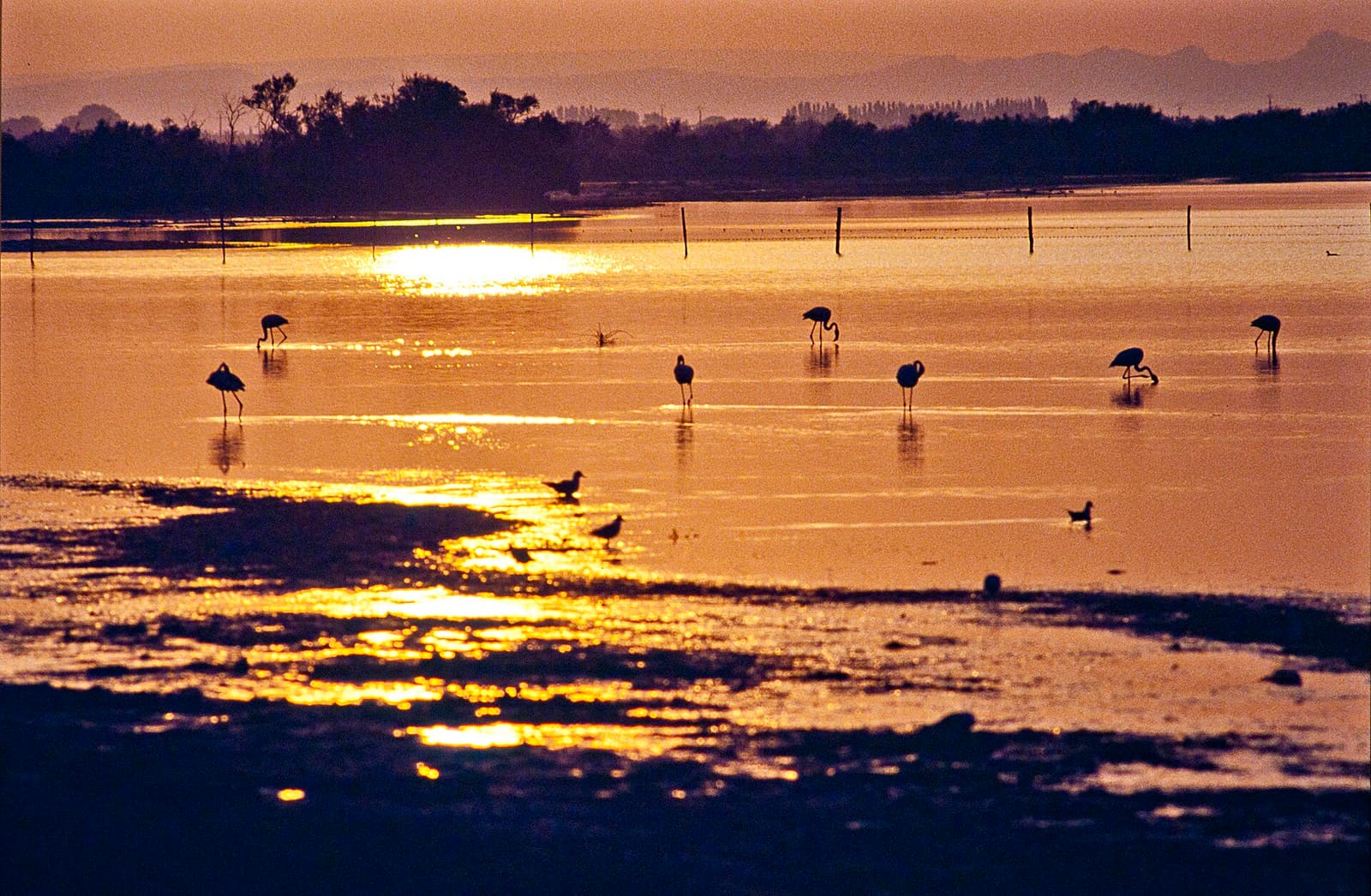
Open 4x4s leave from the town centre for two- to four-hour trips onto private estates to see manades of bulls and horses and the flamingos on the lagoons. Excursion boats sail on the Petit Rhône a few kilometres west of town, and in summer boats also run along the coast.
Arena and local festivals
Saintes-Maries has its own bullring by the seafront, where courses camarguaises — the local bloodless bull games — are held in season, along with abrivados, when gardians drive bulls through the streets. The Musée Baroncelli in the town centre tells the story of the Marquis Folco de Baroncelli, who did much to revive Camargue traditions in the early 20th century.
How to get to Saintes-Maries-de-la-Mer
- From Arles (about 38 km), the regional bus line run under the ZOU! network connects the bus station with Saintes-Maries several times a day, taking roughly an hour; services are more frequent in summer. Check the current timetable before relying on it, especially on Sundays.
- By car, follow the D570 from Arles straight across the delta; the drive takes about 45 minutes. Paying car parks surround the town centre and fill up on summer weekends.
- From Aigues-Mortes and Montpellier, the road crosses the Petit Rhône by the D58 and D570 via Albaron, or by the little Bac du Sauvage ferry on the D85 if you are coming from the west by the coast road. There is no railway.
Insider tips
- Arrive early in summer: by late morning the car parks and the beaches near the centre are busy, and the light over the marshes is best before nine.
- Bring mosquito repellent from late spring to early autumn, especially if you are staying for sunset or eating outdoors.
- Tellines — tiny local clams cooked with garlic and parsley — are the classic starter here; gardiane, a slow-cooked bull stew served with Camargue rice, is the classic main.
- The Pont de Gau bird park is only four kilometres north on the D570: combine it with the town in a single day.
Best tours & tickets for Saintes-Maries-de-la-Mer
These well-reviewed experiences pair well with a visit to Saintes-Maries-de-la-Mer:
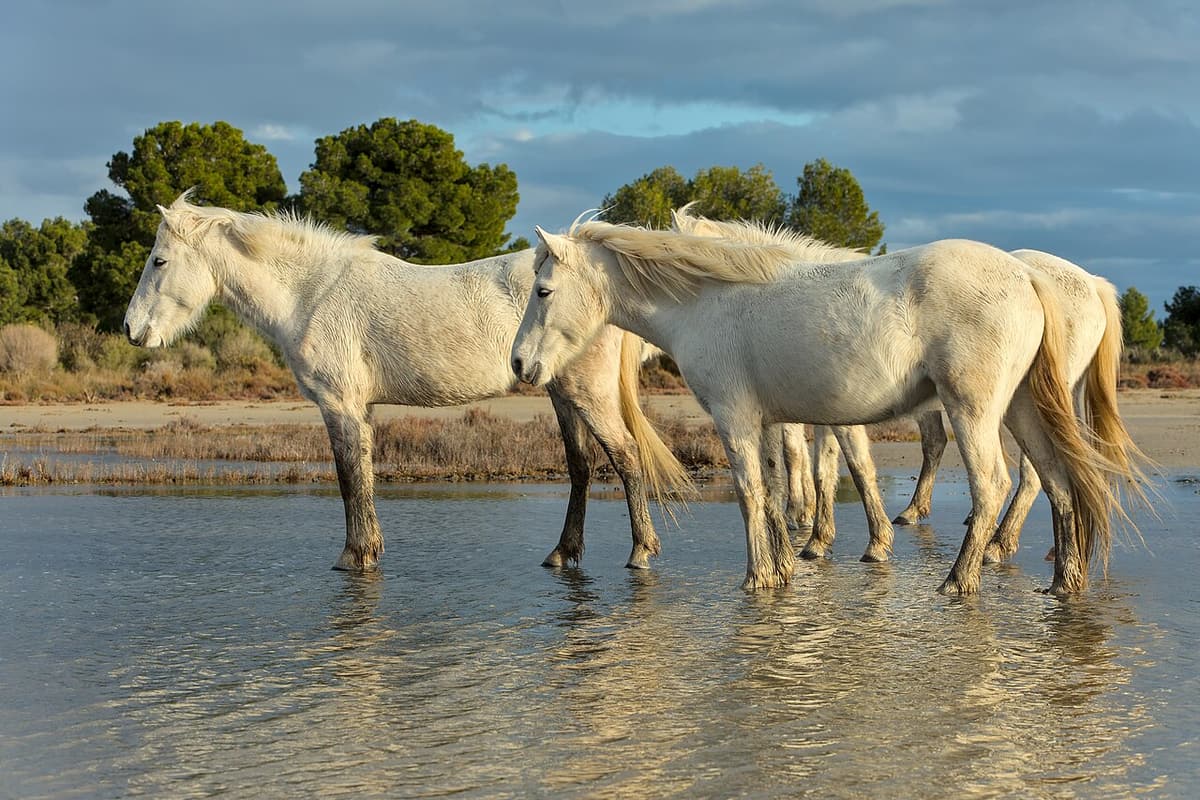 Convertible 4x4 safari from €50
Camargue: Safari from Saintes-Maries-de-la-Mer
A two-hour ride in a convertible 4x4 through the landscapes around Saintes-Maries, the heart of the Camargue. A good choice if you are already in town and want to see the manades and lagoons without committing half a day.
- Short and good value
- Open-top 4x4
- Leaves from the town centre
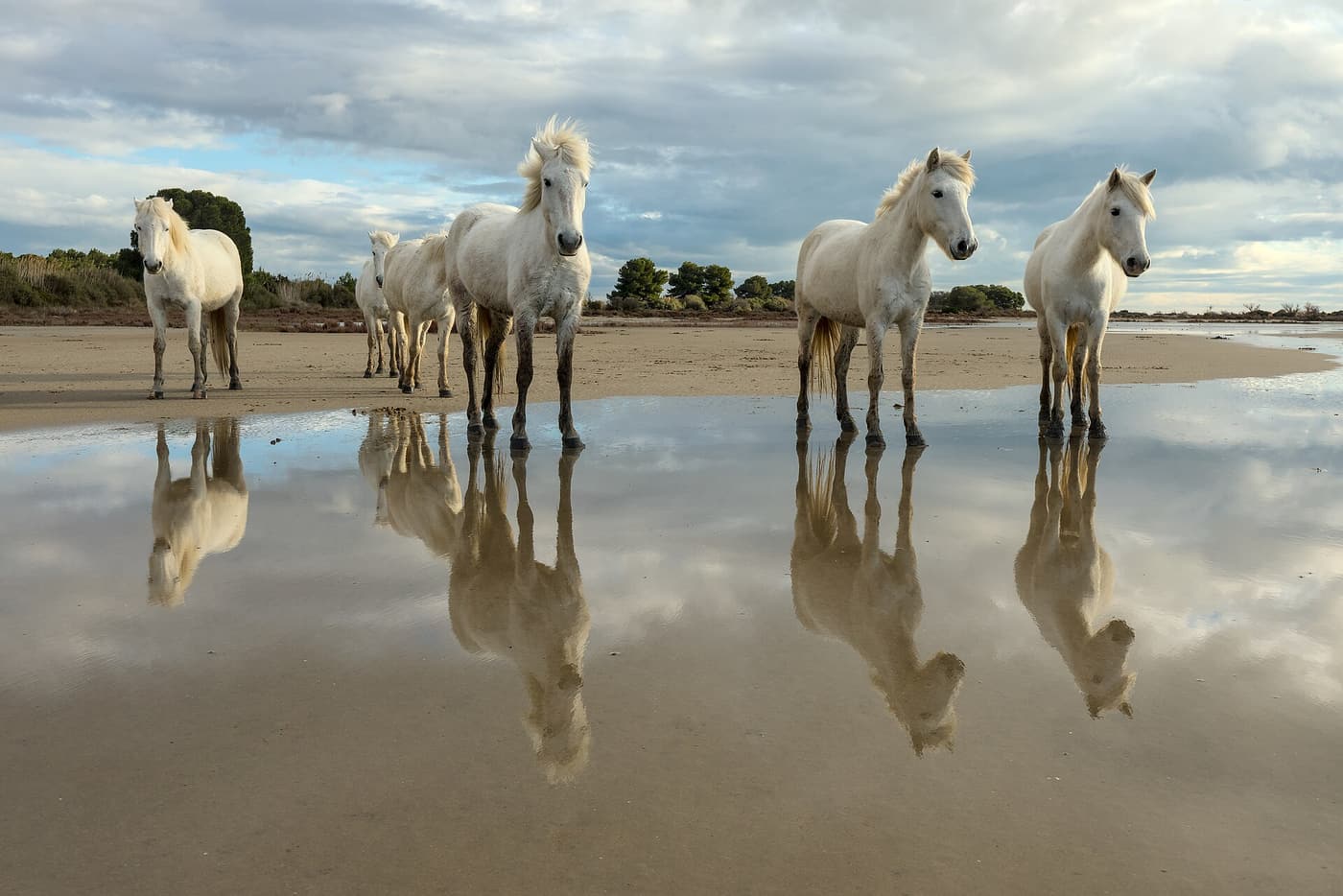 Small-group horseback ride from €89
Saintes-Maries-de-la-Mer: Purebred Camargue Horseback Ride
Ride one of the white horses of the delta through the marshes near Saintes-Maries on a guided small-group outing. Choose the duration that suits your experience; beginners are usually accepted, but check the listing.
- Purebred Camargue horses
- Rides through the reserve
- Small group
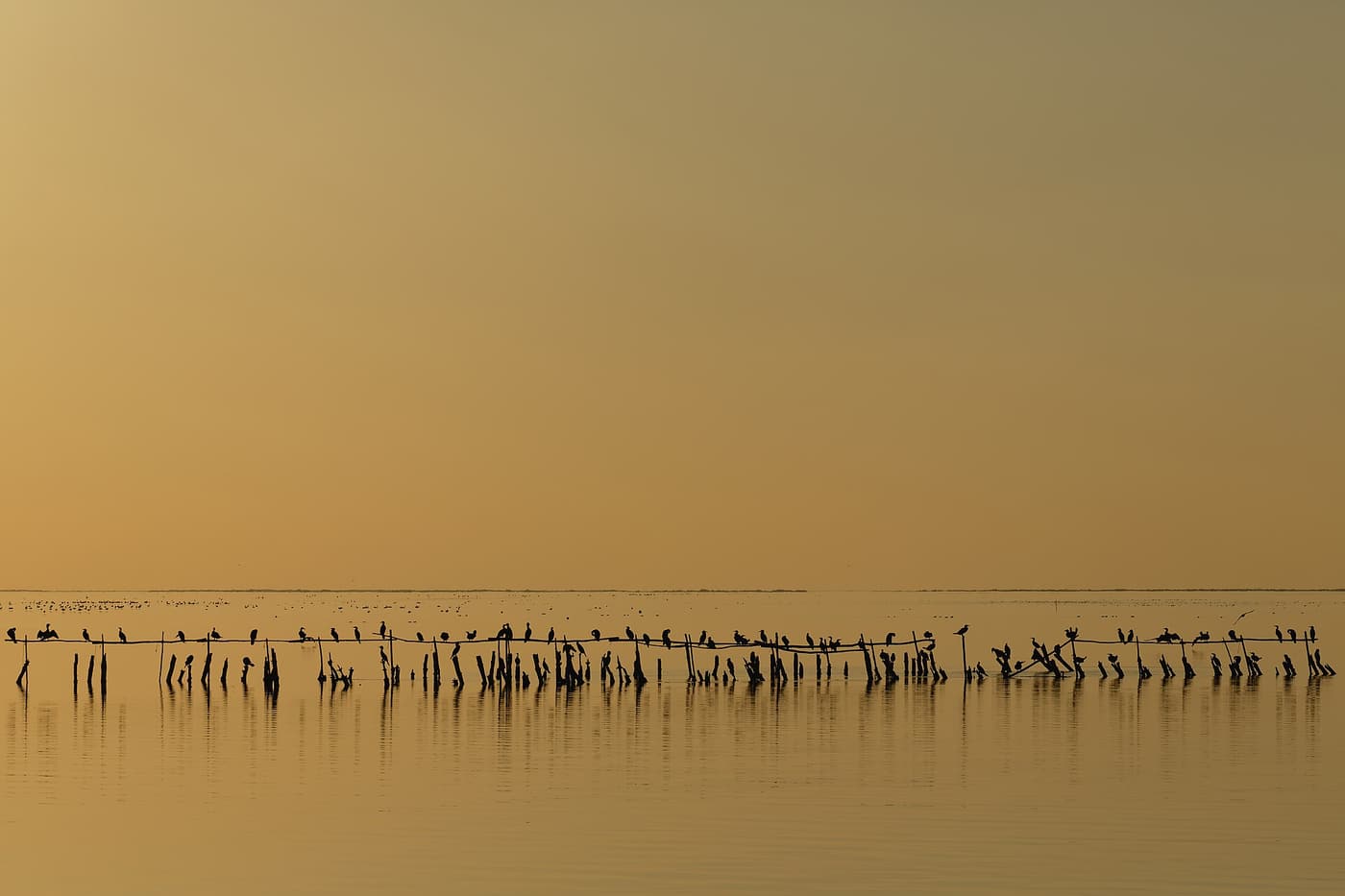 Small-group electric 4x4 safari from €86
Camargue: Electric 4x4 Safari from Saintes-Maries with Food Tasting
The electric safari departing from Saintes-Maries-de-la-Mer: a silent 4x4, a small group and a live guide, looking for flamingos, horses and bulls, with a tasting of local products.
- Silent electric 4x4
- Leaves from Saintes-Maries
- Local tasting
 Guided horseback ride from €65
Saintes-Maries-de-la-Mer: Horseback Ride Between Land and Marsh
A guided ride between land and marsh near Saintes-Maries, starting with preparing your horse. Several durations are available and all levels are welcome.
- Preparing your horse included
- All levels
- Helmet provided
 Full-day guided tour from €130
From Avignon: Camargue Tour with Pont de Gau Bird Park Entry
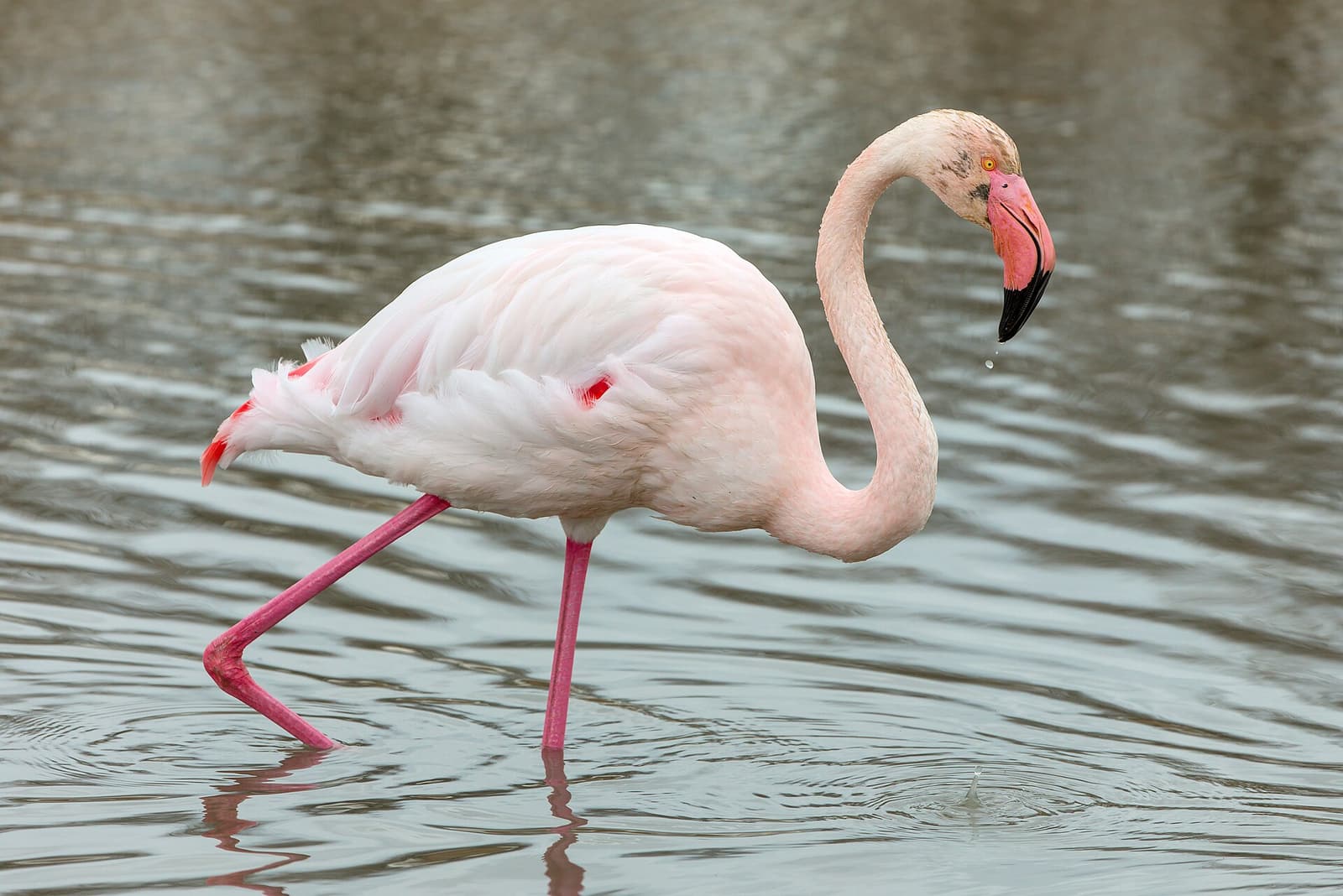
A full day from Avignon covering the essentials: flamingos at the Pont de Gau bird park (entry included), the towns of the delta, Mediterranean beaches, the marshes and the manades.
- Pont de Gau bird park entry
- Historic towns and beaches
- Bulls and horses in their pastures
 Full-day guided tour from €110
From Montpellier: Camargue and Salt Marshes Guided Tour
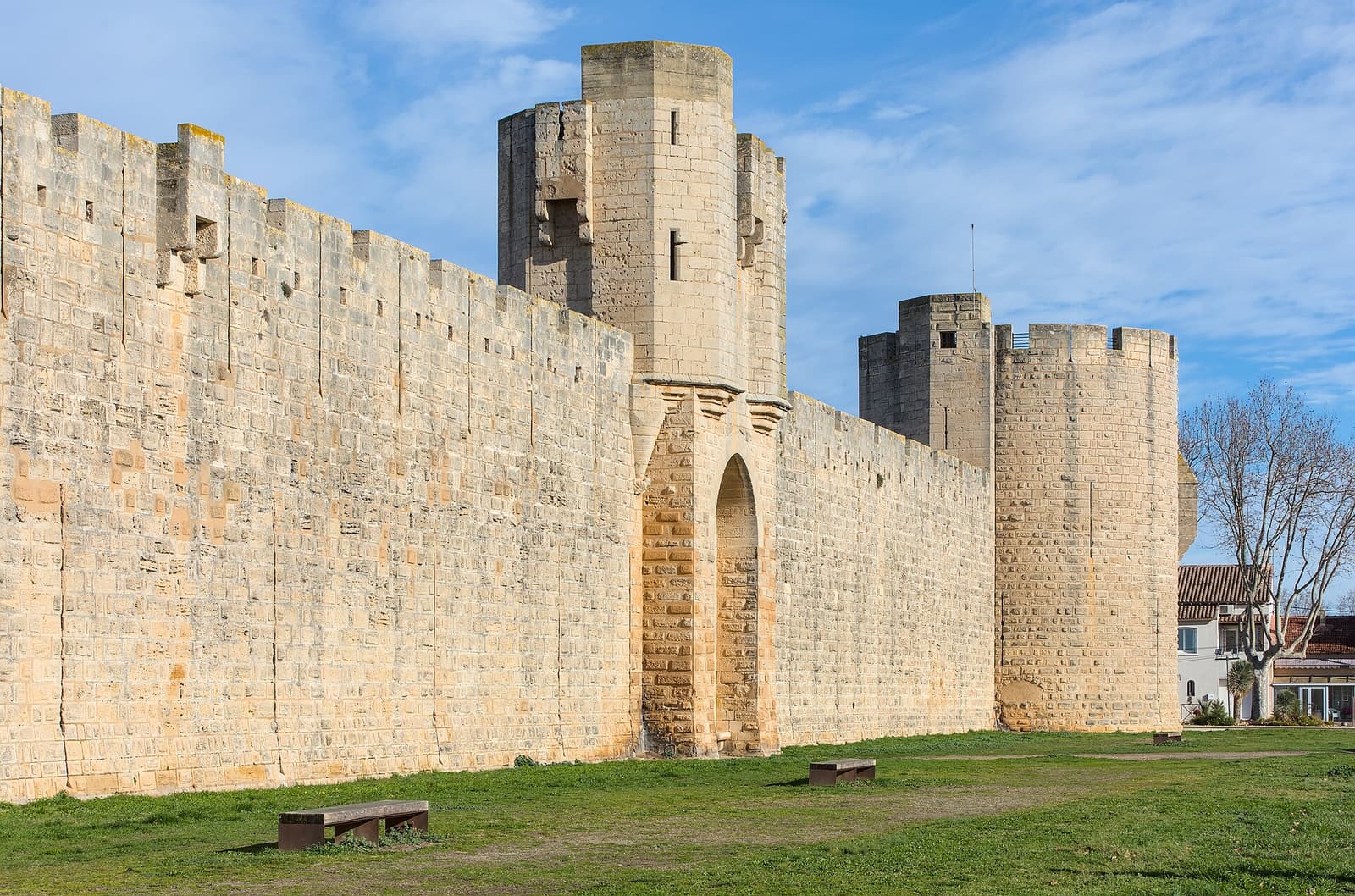
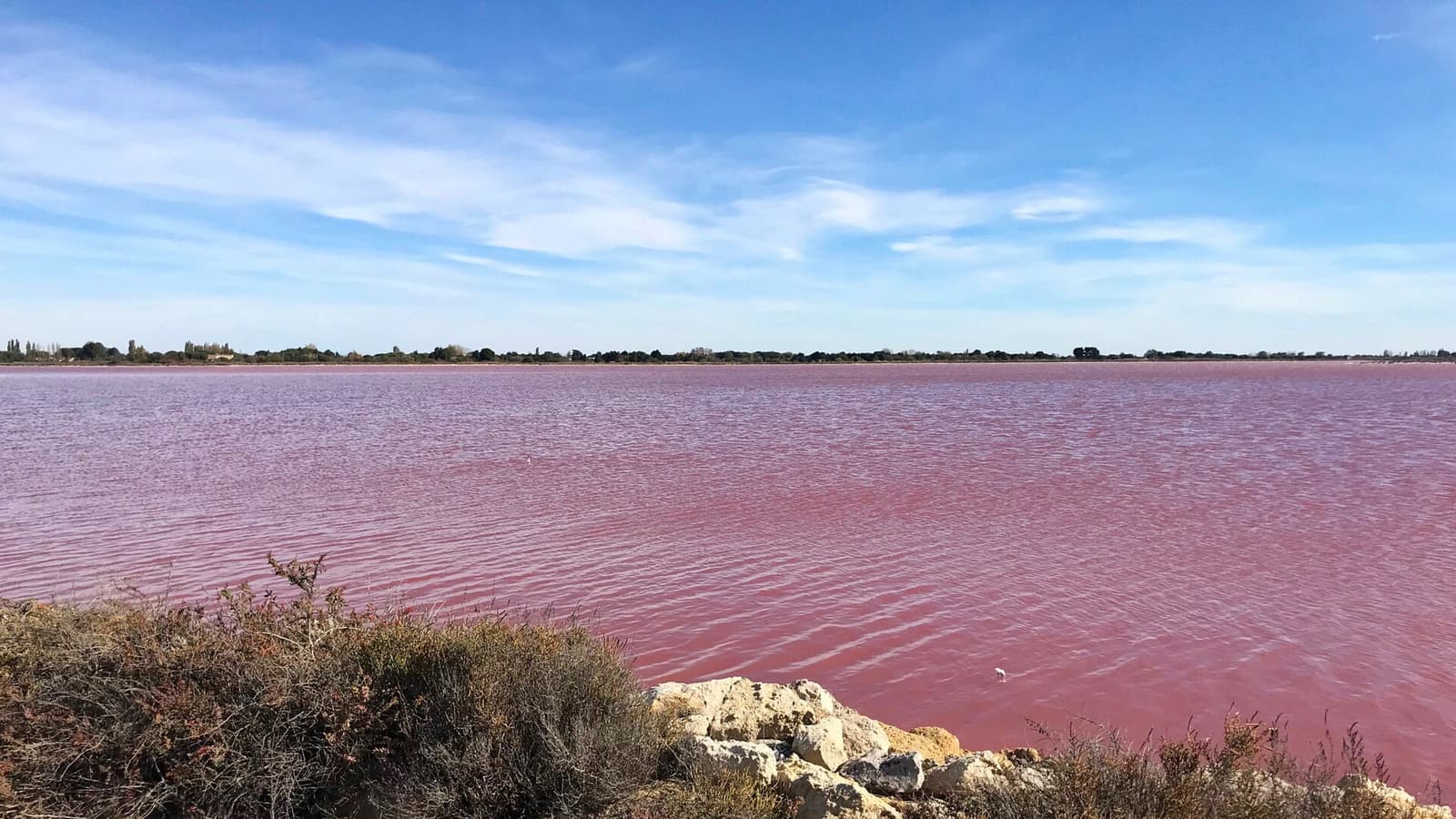
A full day from Montpellier to the salt marshes of the Camargue, the walled town of Aigues-Mortes and Saintes-Maries-de-la-Mer, with time to see flamingos.
- Salt marshes
- Saintes-Maries and Aigues-Mortes
- Flamingos up close